

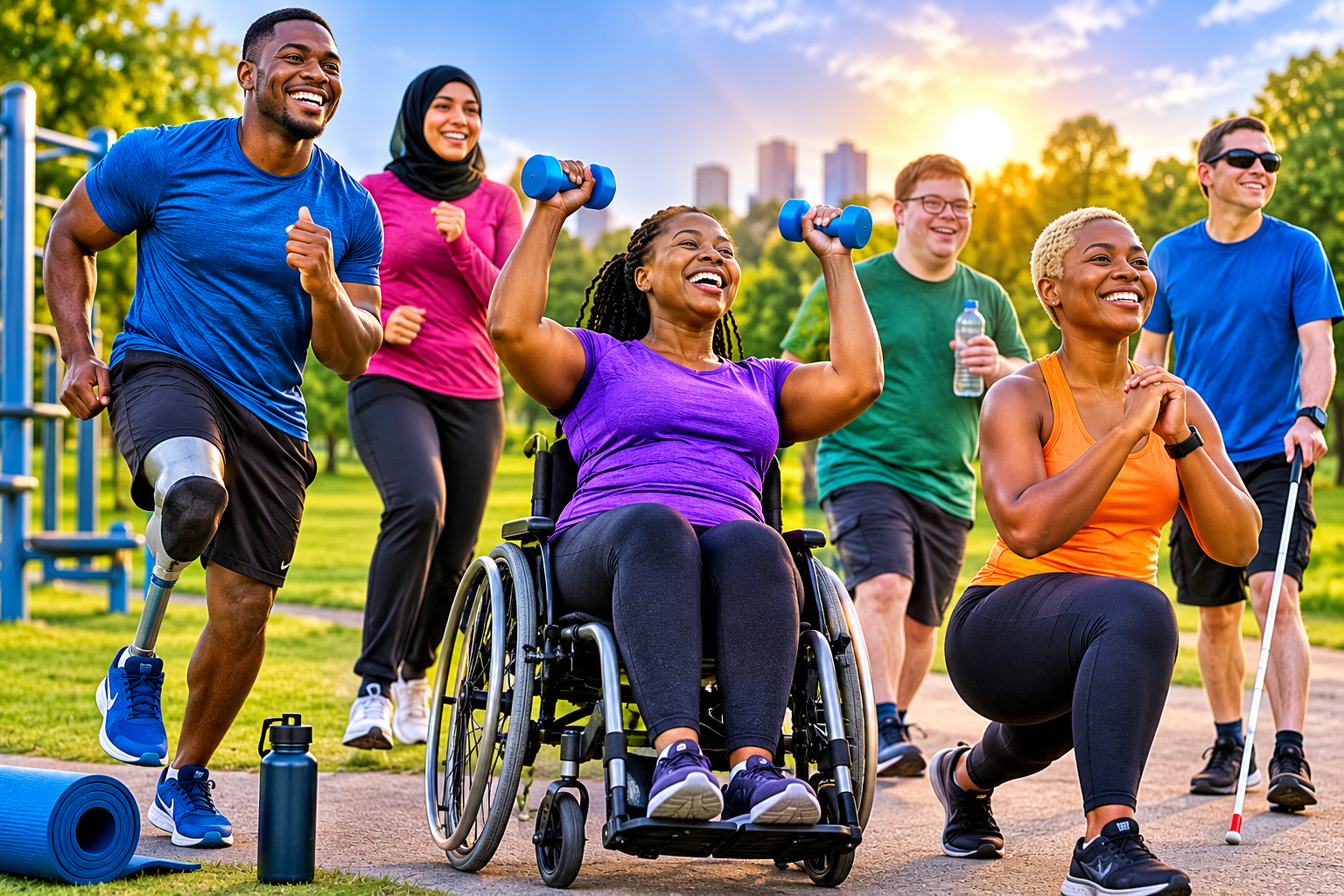
Fitness is not reserved for people who can run, jump, lift heavy weights, or participate in traditional sports. Fitness belongs to everyone, regardless of physical ability, age, body shape, or disability.
Imagine walking into a gym and finding that the entrance is inaccessible to wheelchair users. Imagine wanting to join a fitness class but discovering that the instructor has no idea how to accommodate your needs. Or imagine being told, directly or indirectly, that certain physical activities are simply not meant for people like you.
Unfortunately, this is still the reality for many people living with disabilities.
Fitness should never be about excluding people because of what their bodies cannot do. It should be about recognizing what every individual can do, providing the right support, and creating opportunities for everyone to participate.
This is why disability-inclusive fitness matters.
It is not simply about allowing people with disabilities into fitness facilities. It is about creating environments where they feel welcomed, respected, supported, and empowered to participate without unnecessary barriers.
Let’s explore why inclusive fitness is important and how we can make physical activity accessible to everyone.
1. What Is Disability-Inclusive Fitness?
Disability-inclusive fitness refers to physical activities, exercise programmes, sports, and fitness environments designed or adapted to accommodate people with different disabilities and abilities.
These may include individuals living with:
- Physical disabilities, including mobility impairments.
- Visual impairments or blindness.
- Hearing impairments or deafness.
- Intellectual disabilities.
- Developmental disabilities.
- Neurological conditions.
- Chronic conditions that affect physical movement or endurance.
The goal is not to expect everyone to exercise in the same way.
Instead, it is to recognize individual differences and provide appropriate adaptations so that everyone has a fair opportunity to participate.
Inclusion does not mean making everyone do the same thing. It means making sure everyone has an opportunity to take part.
2. Why Is Fitness Important for People Living With Disabilities?
Physical activity offers important health and well-being benefits for people with and without disabilities.
When appropriately planned and adapted, exercise can contribute to:
A. Improved Physical Health
Regular physical activity can support cardiovascular health, muscle strength, flexibility, mobility, and endurance.
For individuals with mobility limitations, appropriate exercises can help maintain functional movement and support independence.
B. Better Mental and Emotional Well-being
Living with a disability can sometimes involve social isolation, discrimination, emotional stress, or barriers to participating in everyday activities.
Physical activity can help improve mood, reduce stress, and create opportunities for social interaction.
It can also provide a sense of achievement and confidence.
C. Greater Independence and Everyday Functionality
Depending on an individual’s abilities and needs, adapted exercise can help develop strength, balance, coordination, and functional skills that support everyday activities.
For example, improving upper-body strength may help some wheelchair users with daily mobility and transfers.
D. Increased Social Connection
Fitness activities provide opportunities to meet people, build friendships, develop teamwork, and feel connected to a community.
Inclusive group exercise programmes can help reduce social barriers and challenge the misconception that disability should prevent someone from participating in physical activities.
E. Improved Confidence and Self-Esteem
Every achievement matters.
Whether someone completes their first adapted exercise session, improves their balance, increases their endurance, or learns a new sporting skill, these milestones can strengthen confidence and encourage continued participation.
3. Examples of Disability-Inclusive Fitness Activities
One of the biggest misconceptions about disability and fitness is that exercise must look a certain way.
The truth is that there are many ways to move and remain physically active.
Here are some examples:
1. Wheelchair-Based Exercises
Wheelchair users can participate in adapted strength training, resistance exercises, wheelchair sports, and other activities designed around their mobility and individual needs.
2. Seated Exercises
Seated exercises can help individuals with limited balance or mobility participate in physical activity.
Activities may include seated stretching, resistance-band training, arm movements, and adapted aerobic exercises.
3. Inclusive Swimming and Aquatic Exercise
Swimming and water-based exercise can provide opportunities for movement while reducing the impact of body weight on joints.
Appropriate supervision, accessible pool facilities, and individualized safety arrangements are important.
4. Adapted Yoga and Stretching
Yoga and stretching can be adapted using chairs, support equipment, modified positions, and alternative movements to accommodate different physical abilities.
5. Inclusive Team Sports
Sports such as wheelchair basketball, wheelchair rugby, sitting volleyball, and goalball create opportunities for teamwork, competition, skill development, and community participation.
6. Walking and Guided Movement Activities
Depending on individual mobility and support requirements, walking, guided movement, and other low-impact activities can be incorporated into a suitable fitness routine.
The most important consideration is finding activities that are enjoyable, appropriate, safe, and achievable for each individual.
4. Barriers That Prevent People With Disabilities From Accessing Fitness
Although awareness of disability inclusion is growing, many challenges still exist.
Some of the most common barriers include:
- Inaccessible facilities: Gyms without ramps, accessible changing rooms, suitable toilets, or appropriate equipment.
- Lack of trained instructors: Fitness professionals who do not understand how to adapt exercises for different disabilities.
- Financial limitations: Adaptive equipment, specialized programmes, and accessible transport can be expensive.
- Negative attitudes: Discrimination, stereotypes, and assumptions about what people with disabilities can or cannot achieve.
- Limited information: A lack of accessible fitness programmes and information about available opportunities.
- Communication barriers: Fitness environments that do not accommodate people with hearing, visual, intellectual, or communication-related disabilities.
These challenges remind us that inclusion requires more than good intentions. It requires practical changes, investment, education, and a willingness to listen to people with disabilities.
5. How Can We Make Fitness More Inclusive?
Creating inclusive fitness environments is a shared responsibility.
Gyms, fitness instructors, sports organizations, healthcare professionals, communities, and individuals all have a role to play.
Here are some practical ways to make a difference:
1. Improve physical accessibility.
Fitness facilities should consider ramps, accessible entrances, appropriate changing facilities, adapted equipment, and safe movement spaces.
2. Educate fitness professionals.
Trainers and instructors should receive appropriate training in disability awareness, inclusive communication, exercise adaptations, and safety considerations.
3. Offer flexible exercise programmes.
One exercise programme cannot meet everyone’s needs. Activities should allow for modifications based on individual abilities, preferences, and health considerations.
4. Listen to people with disabilities.
Do not assume you know what someone needs simply because you know their diagnosis.
Ask respectfully, listen to their preferences, and involve them in decisions about their fitness goals.
5. Make fitness information accessible.
Use clear communication, accessible formats, visual demonstrations, captions, and other appropriate communication support.
6. Challenge stereotypes.
Avoid treating people with disabilities as incapable of participating in physical activity.
Focus on individual abilities, goals, interests, and achievements rather than limitations alone.
6. A Message to Fitness Instructors and Healthcare Professionals
If you work in fitness, rehabilitation, healthcare, or community wellness, remember that inclusion begins with your attitude.
Do not define someone’s potential by their disability.
Take time to understand their individual needs, identify appropriate modifications, and create an environment where they feel comfortable asking questions and expressing concerns.
Where necessary, work with qualified healthcare professionals or rehabilitation specialists to ensure that exercise recommendations are appropriate.
Most importantly, remember that people with disabilities are not looking for sympathy. They deserve equal opportunities, respect, dignity, and meaningful participation.
7. A Message to People Living With Disabilities
Your fitness journey does not have to look like anyone else’s.
You do not have to compete with another person’s body, strength, speed, or physical ability.
Start with realistic goals that reflect your individual needs. Celebrate progress, however small it may seem, and seek professional guidance when necessary.
Some days will be easier than others, and that is perfectly okay.
Your worth is not measured by how far you can walk, how much weight you can lift, or how fast you can move.
You deserve to feel healthy, confident, included, and supported.
FINAL THOUGHT: LET’S MAKE FITNESS A SPACE WHERE EVERY BODY BELONGS!
A truly healthy society is one where everyone has the opportunity to participate in activities that promote physical, mental, and social well-being.
Disability should never be a reason for someone to be excluded from fitness opportunities.
We need gyms that welcome everyone, instructors who understand inclusion, communities that encourage participation, and programmes that recognize different abilities.
Let us move away from the idea that fitness has one standard appearance.
Fitness can happen in a wheelchair, in a swimming pool, through seated exercises, on a sports field, or through any appropriately adapted movement that supports an individual’s health and well-being.
The goal is not to make every body move the same way. The goal is to make movement possible for everybody.
Let’s build fitness spaces where differences are respected, abilities are celebrated, and nobody is left behind.
Because fitness is not just about movement. It is about health, dignity, confidence, independence, and belonging.
INCLUSION IS NOT A PRIVILEGE. IT IS AN OPPORTUNITY EVERYONE DESERVES.
What changes would you like to see in your local gyms, fitness centres, and community sports programmes to make them more disability-inclusive?
Let’s start the conversation and turn awareness into action!
#DisabilityInclusion #InclusiveFitness #AccessibleFitness #AdaptiveSports #DisabilityAwareness #HealthAndWellness #EqualOpportunities #FitnessForEveryone #InclusiveCommunities
HEALTH EDUCATIONAL DISCLAIMER:
This content is intended for general health education and awareness purposes only. It is not a substitute for individualized medical advice, diagnosis, rehabilitation assessment, or treatment. Exercise needs and safety considerations differ depending on an individual’s disability, medical history, functional abilities, and overall health. Before starting a new exercise programme or making significant changes to physical activity, consult a qualified healthcare professional, physiotherapist, or appropriately trained exercise specialist. All exercise activities should be adapted to individual needs and performed with suitable safety measures and assistance where necessary.