

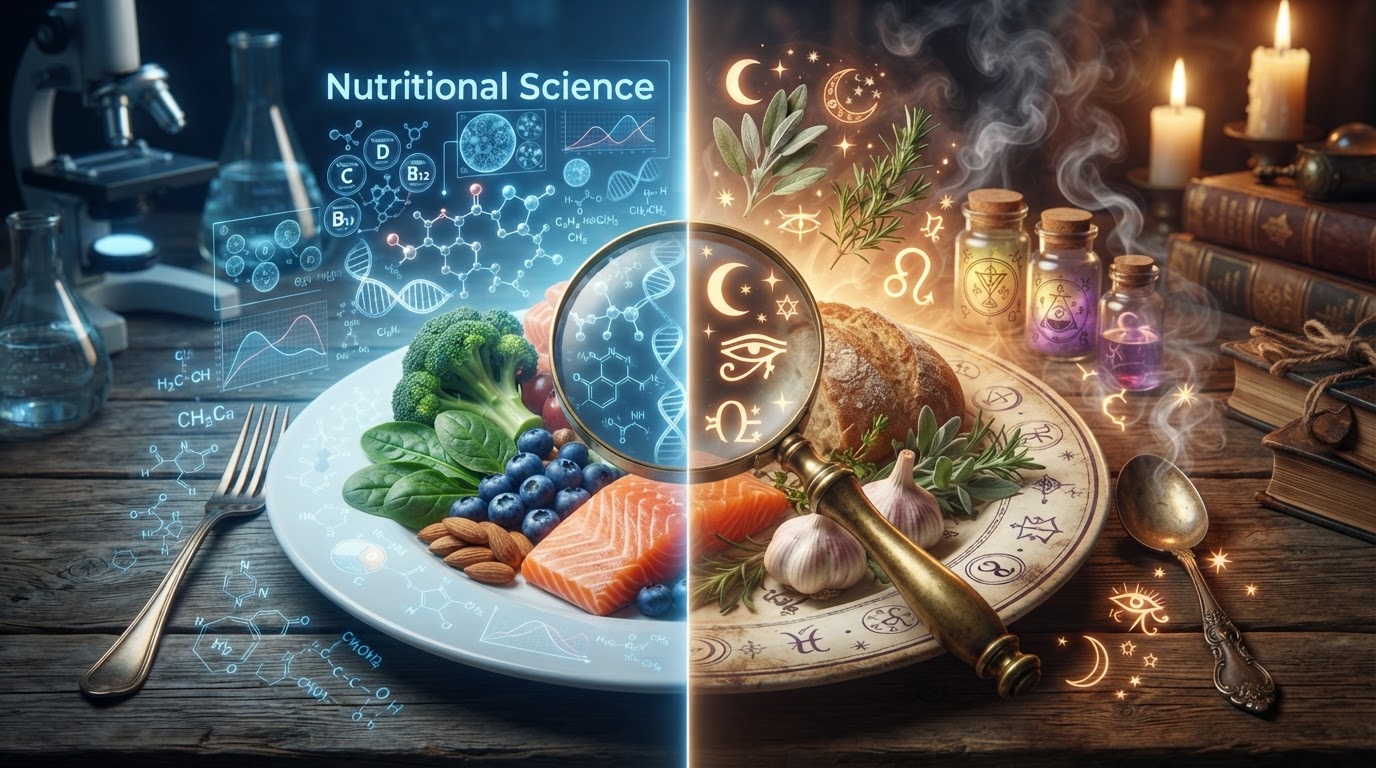
Rethinking what we eat, questioning what we believe, and making informed choices for lifelong well-being.
Food is more than fuel. It connects us to our families, cultures, traditions, and memories. From the remedies passed down through generations to the dietary advice shared around the dinner table, our beliefs about nutrition are often shaped by experiences long before we encounter scientific evidence.
Some traditional food practices offer valuable nutritional wisdom. Others persist because they sound convincing, have been repeated for years, or promise simple answers to complex health questions.
In today’s digital world, distinguishing between the two has become increasingly important. One day, a particular food is celebrated as a miracle ingredient; the next, it is blamed for every health problem imaginable. Restrictive diets, detox products, and sensational nutritional claims compete for our attention, often leaving people more confused than informed.
At Vigor Nest, we believe better health begins with better understanding. Nutrition should be guided by credible evidence, practical knowledge, cultural awareness, and an appreciation of individual needs — not fear, exaggerated promises, or outdated assumptions.
The goal is not to dismiss tradition. It is to understand which practices serve us, which claims deserve closer examination, and how scientific knowledge can help us make more confident decisions about the food we eat.
1. Food Folklore: Why Familiar Beliefs Can Feel Like Facts
Food beliefs are often passed down through families and communities. They may involve particular foods being considered strengthening, certain meals being avoided at specific times, or specific ingredients being credited with preventing illness.
These beliefs can carry cultural significance and may reflect generations of practical experience. However, a practice being familiar or widely accepted does not automatically establish that its health claims are scientifically accurate.
For example, the belief that eating after a certain evening hour inevitably causes weight gain oversimplifies a complex process. Body weight is influenced by overall energy intake, energy expenditure, sleep, activity, medications, and other individual factors. Meal timing can matter in some contexts, but the clock alone does not determine whether a meal causes weight gain.
Similarly, the idea that a single food can cleanse the body overlooks the work performed by organs such as the liver and kidneys, which help process and eliminate waste products.
The important distinction is this: cultural significance deserves respect, while health claims deserve evidence.
We can appreciate traditional foods, preserve meaningful practices, and remain open to new scientific knowledge without treating every inherited belief as a biological fact.
2. The Science of Nutrition: Understanding What the Body Actually Needs
Nutrition is a complex field because food affects the body through multiple interconnected processes.
Carbohydrates provide an important source of energy. Protein supplies amino acids needed for tissue maintenance and repair. Dietary fats support cell structure and help the body absorb vitamins A, D, E, and K. Vitamins and minerals contribute to essential physiological functions, while dietary fibre supports digestive health.
These nutrients work together. Their value depends partly on the overall dietary pattern, the amounts consumed, and an individual’s nutritional requirements.
This is why balanced eating is generally more useful than dividing foods into simplistic categories of completely good or completely bad.
Consider carbohydrates. They are sometimes portrayed as inherently unhealthy, yet foods such as oats, beans, lentils, fruit, and whole grains provide carbohydrates alongside fibre and other beneficial nutrients.
The nutritional value of a food depends on more than one nutrient or a single number on a label.
A science-informed approach asks not simply whether a food is good or bad, but how it contributes to the overall quality of a person’s diet.
3. Detoxification Myths: Why Your Body Does Not Need Every Cleansing Trend
Detoxification is one of the most persistent themes in modern wellness marketing.
Juice cleanses, detox teas, restrictive diets, and specialised supplements are frequently promoted as ways to eliminate toxins, reset metabolism, or restore the body after periods of indulgence.
The problem is that these claims often go beyond the available evidence.
Your body already has sophisticated systems for processing and eliminating waste. The liver helps metabolise substances, while the kidneys filter the blood and regulate fluid and electrolyte balance. The digestive system also plays an important role in eliminating waste.
Commercial detox products are not generally necessary to support these normal processes, and some restrictive cleanses may lead to dehydration, inadequate nutrient intake, or other adverse effects.
This does not mean that everyday choices are irrelevant. Adequate hydration, a balanced diet, sufficient sleep, physical activity, and limiting alcohol can support overall health.
However, supporting normal bodily function is very different from claiming that a product can rapidly remove unspecified toxins.
Before purchasing a detox product, ask a simple question: What specific health benefit has been demonstrated in reliable human studies?
If the claims are vague, dramatic, or supported mainly by testimonials, caution is warranted.
4. Superfoods and Supplements: Looking Beyond the Marketing
The term superfood is widely used to describe foods believed to offer exceptional health benefits. Although some foods are particularly rich in specific nutrients, the term itself does not guarantee a special medical effect.
Berries, leafy greens, legumes, nuts, seeds, and oily fish can all contribute valuable nutrients to a balanced diet. Yet no single food can compensate for an otherwise inadequate eating pattern.
The same principle applies to supplements.
Supplements can be useful when dietary intake is insufficient, a deficiency has been identified, or a particular life stage or medical circumstance increases nutritional requirements. However, more is not always better. Excessive amounts of certain vitamins and minerals can be harmful, and supplements may interact with medications.
A product labelled natural is not automatically safe, effective, or appropriate for everyone.
A smarter approach to supplementation includes:
- Identifying the specific nutritional need you are trying to address.
- Prioritising food sources where practical.
- Checking whether credible evidence supports the claimed benefit.
- Considering product quality, dosage, and possible interactions.
- Seeking guidance from a qualified healthcare professional when appropriate.
Health decisions should be based on a person’s actual needs, not the popularity of a product or the persuasiveness of its advertising.
5. Personalised Nutrition: Why One Diet Cannot Suit Everyone
Nutrition advice often becomes misleading when it assumes that every person has the same needs.
Age, activity levels, pregnancy, breastfeeding, medical conditions, allergies, medications, cultural practices, and financial circumstances can all influence dietary requirements.
For example, iron needs may be particularly important for people who experience heavy menstrual bleeding. Older adults may need to pay closer attention to adequate protein intake to support muscle maintenance. People managing certain medical conditions may require specific dietary guidance.
Even within the same household, nutritional needs can differ.
This is why extreme dietary rules can be counterproductive when applied without considering individual circumstances.
Rather than searching for a universally perfect diet, focus on establishing a dietary pattern that provides adequate nutrients, includes a variety of foods, and is realistic to maintain.
Personalisation is not about making nutrition unnecessarily complicated. It is about making sound advice relevant to the person receiving it.
6. Becoming a More Informed Consumer of Nutrition Advice
In an environment where nutritional information spreads rapidly, critical thinking is an essential wellness skill.
A confident speaker, a popular social media account, or a compelling personal story does not necessarily provide reliable evidence. Equally, a scientific study should not be interpreted without considering its limitations, the wider body of research, and whether its findings apply to real-world eating patterns.
Before accepting a nutritional claim, consider the following questions:
What is the evidence? Look for reliable research, systematic reviews, and guidance from recognised public health or professional organisations.
Is the claim exaggerated? Be cautious of promises to cure multiple conditions, guarantee rapid results, or replace established medical care.
Does the advice acknowledge individual differences? Recommendations that ignore medical conditions, age, or other relevant factors may be oversimplified.
Is someone trying to sell a solution? Commercial interests do not automatically make a claim false, but they are a reason to examine the evidence carefully.
Can the recommendation be sustained? A practical, balanced approach is often more useful than a restrictive plan that cannot realistically fit into everyday life.
Learning to ask these questions helps turn nutritional information into better decisions.
7. Building a Sustainable Relationship With Food
Scientific knowledge should not make eating feel like a constant examination.
A healthy relationship with food includes nourishment, enjoyment, flexibility, and respect for cultural traditions. It allows room for favourite meals without unnecessary guilt and recognises that one meal does not determine a person’s long-term health.
Start with practical foundations: eat a variety of vegetables and fruits, include appropriate protein sources, choose fibre-rich foods regularly, stay adequately hydrated, and aim for an overall dietary pattern that meets your needs.
Make changes gradually. Use foods that are accessible and affordable. Seek individual guidance when health conditions or specific nutritional concerns require it.
Most importantly, remember that healthy eating does not have to be perfect to be beneficial.
The Vigor Nest Perspective: Evidence Over Hype, Understanding Over Fear
Beyond the plate lies a broader understanding of health — one that recognises the relationship between nutrition, lifestyle, culture, and individual physiology.
Food folklore can preserve meaningful traditions, but it should not prevent us from questioning unsupported health claims. Nutritional science can guide better decisions, but it should be communicated thoughtfully, without unnecessary fear or unrealistic promises.
At Vigor Nest, we believe that informed nutrition empowers people to make choices that are practical, sustainable, and appropriate for their circumstances.
You do not need to follow every trend, eliminate entire food groups without reason, or purchase expensive products to begin improving your dietary habits.
You need reliable information, a balanced perspective, and the confidence to distinguish evidence from exaggeration.
Because better nutrition begins not with fear of the wrong food, but with understanding what your body needs and why.
Your Vigor Nest Wellness Challenge
The next time you encounter a surprising nutrition claim, pause before accepting or sharing it.
Check the source, examine the evidence, and consider whether the advice is relevant to your individual needs.
Then ask yourself: Is this helping me make a more informed decision, or simply making me afraid of food?
That simple distinction can be the beginning of a healthier relationship with nutrition.
Let’s start a conversation: What is one nutrition myth you believed for years before discovering a different perspective?
Share your experience in the comments. Your insight may help someone else question misinformation and make more confident choices.
Vigor Nest | Beyond trends. Beyond myths. Towards evidence-informed, sustainable well-being.
#VigorNest #NutritionScience #FoodMyths #EvidenceBasedNutrition #HealthyEating #NutritionalWellness #HealthLiteracy #HolisticWellness