

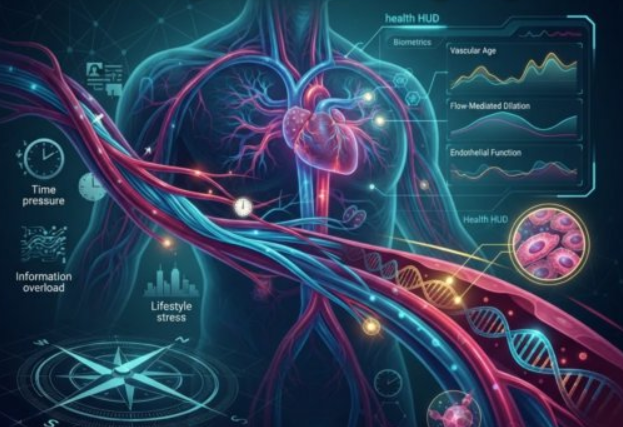
Why the Future of Healthy Ageing Begins With Your Blood Vessels
Modern life places extraordinary demands on the human body. Chronic stress, disrupted sleep, sedentary routines, ultra-processed foods, environmental exposures, and the relentless pace of digital living create a complex physiological environment in which long-term health must be actively protected.
Among the systems most affected by these pressures is the vascular system—the intricate network of arteries, veins, and microscopic blood vessels responsible for delivering oxygen, nutrients, and essential signals throughout the body.
Yet vascular health is often overlooked until a problem becomes apparent.
High blood pressure, cardiovascular disease, reduced exercise tolerance, and declining metabolic health can develop gradually, sometimes without noticeable symptoms. By the time these conditions are identified, years of accumulated physiological stress may already have influenced the body’s capacity to function optimally.
This is where vascular resilience and precision longevity become powerful concepts.
Rather than focusing exclusively on lifespan or reacting to disease after it develops, precision longevity emphasizes understanding individual health risks, identifying early changes, and implementing targeted strategies to preserve physiological function over time.
Vascular resilience is a cornerstone of this approach. It represents the capacity of the blood vessels to maintain healthy function, adapt to changing demands, regulate blood flow, and support the body’s ability to withstand both everyday stressors and the challenges of ageing.
The goal is not simply to live longer. It is to preserve the biological capacity to live well.
1. Understanding Vascular Resilience
Healthy blood vessels are dynamic structures. They continuously respond to changes in blood pressure, temperature, physical activity, metabolic demand, and the body’s internal chemical environment.
The endothelium, a thin layer of cells lining the inside of blood vessels, plays a particularly important role. It helps regulate vessel dilation and constriction, influences inflammation and clotting, and contributes to the maintenance of healthy circulation.
One of its key functions involves nitric oxide, a signaling molecule that helps blood vessels relax and expand when additional blood flow is required.
When endothelial function is impaired, blood vessels may become less responsive, inflammatory processes can increase, and the conditions that promote cardiovascular disease may become more likely.
Vascular resilience therefore depends on several interconnected factors:
- Endothelial health: The ability of blood vessels to regulate circulation and respond appropriately to physiological demands.
- Blood pressure regulation: Maintaining pressure within a healthy range to reduce unnecessary strain on arterial walls.
- Metabolic flexibility: Managing glucose and lipid metabolism in ways that support vascular function.
- Inflammatory balance: Limiting persistent, inappropriate inflammation that may contribute to vascular damage.
- Structural integrity: Preserving the strength and elasticity of blood vessels as the body ages.
These functions do not operate independently. They are influenced by genetics, lifestyle, existing medical conditions, environmental factors, and the cumulative effects of ageing.
A resilient vascular system is not one that remains unchanged. It is one that maintains its capacity to adapt.
2. The Modern Stress Equation: How Daily Pressures Affect Vascular Health
The human body is equipped to respond to acute stress. When a demanding situation arises, the sympathetic nervous system activates, increasing heart rate and temporarily raising blood pressure to help the body respond.
This response is useful in the short term.
The challenge emerges when recovery becomes inadequate and stress is repeatedly activated without sufficient opportunities for restoration.
Workplace pressure, financial uncertainty, constant notifications, poor sleep, and emotional strain can contribute to persistent physiological activation. Over time, these pressures may influence blood pressure, glucose regulation, inflammatory signaling, sleep quality, and health-related behaviours.
The relationship is complex: stress does not automatically cause cardiovascular disease, but chronic stress can contribute to risk, particularly when combined with other adverse factors.
Consider a common modern pattern.
A professional wakes after insufficient sleep, skips breakfast, spends most of the day seated, relies on highly processed convenience foods, and consumes caffeine to maintain productivity. Exercise is postponed because of work demands, while evening screen time delays sleep further.
Individually, these choices may seem manageable. Repeated over months or years, however, they can create an environment that makes healthy blood pressure, metabolic regulation, and cardiovascular recovery more difficult to maintain.
The important insight is that vascular health is shaped not only by major medical events, but also by the repeated physiological consequences of everyday living.
Precision longevity addresses this reality by identifying which pressures matter most for an individual and determining where targeted interventions can produce the greatest benefit.
3. Precision Longevity: Moving Beyond Generic Health Advice
Traditional health advice often emphasizes universal principles: eat well, exercise regularly, sleep adequately, and avoid smoking.
These recommendations remain fundamental. Precision longevity does not replace them; it makes their application more individualized.
Two people of the same age may have substantially different cardiovascular risk profiles. One may have healthy blood pressure and favourable metabolic markers, while the other may have elevated LDL cholesterol, a strong family history of premature cardiovascular disease, and previously undiagnosed hypertension.
Their priorities should not be identical.
A precision-based approach begins with a clear understanding of individual health status, risk factors, personal circumstances, and goals.
Depending on the clinical context, assessment may include:
- Blood pressure: Including home measurements or ambulatory monitoring when appropriate.
- Lipid profile: Evaluating cholesterol and triglycerides, with additional markers such as apolipoprotein B or lipoprotein(a) when clinically indicated.
- Glucose regulation: Using tests such as fasting glucose or HbA1c to assess diabetes risk.
- Lifestyle patterns: Examining physical activity, nutrition, sleep, smoking, alcohol use, and stress.
- Personal and family history: Identifying inherited susceptibility and existing medical conditions.
- Additional investigations: Considering vascular imaging or other cardiovascular assessments when justified by symptoms, clinical findings, or individual risk.
The objective is not to test everything available. It is to select the information that can meaningfully change a prevention or treatment decision.
This distinction matters because more data does not automatically translate into better health. Tests can produce incidental findings, unnecessary anxiety, and additional costs when they are performed without a clear clinical purpose.
True precision means asking better questions, selecting appropriate measurements, and translating the findings into a practical plan.
4. Five Foundations of Vascular Resilience
Foundation One: Protect Endothelial Function Through Movement
Physical activity is among the most effective ways to support cardiovascular health.
During exercise, blood flow increases, generating shear stress along the endothelial surface. This mechanical stimulus helps activate pathways involved in nitric oxide production and vascular adaptation.
Regular physical activity also supports blood pressure regulation, insulin sensitivity, body composition, and psychological wellbeing.
A practical strategy combines aerobic exercise with resistance training.
For most adults, a useful target is at least 150 minutes of moderate-intensity aerobic activity each week, or 75 minutes of vigorous activity, alongside muscle-strengthening exercise on at least two days.
However, the starting point matters. Someone who has been inactive for years may benefit more from consistent walking and gradual progression than from an aggressive training programme.
Breaking up prolonged sitting also helps make movement a regular part of daily life.
The principle is simple: build movement into your routine before relying on motivation to find time for exercise.
Foundation Two: Nourish the Vascular System
Nutrition influences several mechanisms relevant to vascular health, including blood pressure, cholesterol levels, glucose regulation, and inflammation.
A dietary pattern rich in vegetables, fruit, legumes, whole grains, nuts, seeds, and other minimally processed foods provides fibre, micronutrients, and beneficial plant compounds.
Healthy unsaturated fats, including those found in olive oil, nuts, seeds, and oily fish, can help improve dietary fat quality when they replace less favourable sources.
Reducing excessive sodium intake may help lower blood pressure, particularly in people who are salt-sensitive or already have hypertension. Limiting processed meats, sugary drinks, and highly processed foods can also support broader cardiometabolic health.
Dietary quality matters more than any single so-called superfood.
There is no need to chase expensive powders or supplements in the hope of reversing vascular ageing. Evidence-based eating patterns, appropriate medical care, and sustainable habits offer a stronger foundation.
Individual nutritional needs should also reflect medical conditions, cultural preferences, affordability, and personal circumstances.
Foundation Three: Restore Through Sleep
Sleep is an essential component of cardiovascular regulation.
Insufficient or disrupted sleep can affect autonomic nervous system activity, blood pressure patterns, glucose metabolism, appetite regulation, and the ability to recover from physical and psychological stress.
For most adults, regularly obtaining seven to nine hours of sleep is a reasonable goal, although individual requirements vary.
Consistency is valuable. Maintaining relatively stable sleep and wake times, creating a dark and comfortable sleep environment, and reducing stimulating activities before bedtime can support better sleep quality.
Persistent loud snoring, witnessed pauses in breathing, or excessive daytime sleepiness warrant medical assessment because obstructive sleep apnoea is associated with cardiovascular risk.
Sleep should not be treated as an optional reward after productivity. It is part of the biological infrastructure that makes sustained performance possible.
Foundation Four: Regulate Stress Without Ignoring Its Sources
Stress management is often reduced to relaxation techniques, but vascular resilience requires a broader perspective.
Breathing exercises, mindfulness, meditation, time outdoors, meaningful social connection, and structured recovery periods may help people regulate stress and improve wellbeing.
However, these techniques cannot compensate for every source of chronic strain.
Workload, financial pressure, caregiving responsibilities, and unhealthy environments may require practical changes, professional support, or broader structural solutions.
A useful starting point is to identify recurring stressors and determine which are modifiable.
Short recovery practices can then be integrated into the day: a walk between meetings, several minutes of slow breathing, a screen-free meal, or a consistent transition between work and rest.
The aim is not to eliminate stress. It is to improve recovery, reduce unnecessary physiological strain, and develop more sustainable responses to life’s demands.
Foundation Five: Address Risk Factors Early
Some of the most consequential threats to vascular resilience develop silently.
High blood pressure may cause no obvious symptoms. Elevated LDL cholesterol can contribute to atherosclerosis for years without producing discomfort. Prediabetes may remain undetected while metabolic risk gradually increases.
This makes appropriate screening and early intervention essential.
Knowing your blood pressure, understanding your cholesterol profile, assessing diabetes risk, and reviewing smoking status and family history can reveal opportunities for prevention before a cardiovascular event occurs.
Where indicated, medication is an important part of precision prevention. Lifestyle measures are powerful, but they do not eliminate the need for treatment in every individual.
Decisions about cholesterol-lowering medication, blood pressure treatment, or diabetes management should be based on clinical evidence, individual risk, and shared decision-making with a qualified healthcare professional.
The objective is not to avoid medication at all costs. It is to reduce preventable harm using the right combination of interventions.
5. Measuring What Matters: Turning Information Into Action
Precision longevity becomes meaningful when measurement leads to a decision.
Tracking every available biomarker can create the illusion of control without improving outcomes. A better approach is to establish a baseline, identify the most important modifiable risks, and monitor progress at appropriate intervals.
For one individual, the priority may be lowering persistently elevated blood pressure. For another, it may be improving fitness, addressing high LDL cholesterol, or investigating possible sleep apnoea.
Progress can be evaluated using meaningful outcomes rather than arbitrary targets.
Examples include improved blood pressure control, better exercise tolerance, healthier glucose regulation, smoking cessation, and greater consistency in sleep and physical activity.
Wearable devices may help reveal patterns in activity and sleep, but their measurements are not substitutes for validated clinical assessments. Consumer devices cannot reliably establish every aspect of vascular health, and isolated readings should not be interpreted without context.
Similarly, commercial biological-age scores and unvalidated longevity tests should not be mistaken for proven measures of cardiovascular protection.
The best measurement is the one that helps you make a better decision—not simply the one that produces more data.
6. Building a Personal Vascular Resilience Strategy
A sustainable approach does not require a complete lifestyle overhaul overnight.
Instead, begin with a structured review.
First, establish your baseline. Review your medical history, blood pressure, cholesterol, glucose risk, current activity, sleep, and relevant family history with an appropriate healthcare professional.
Second, identify your highest-priority risks. Concentrating on two or three meaningful changes is often more practical than attempting to optimize every aspect of health simultaneously.
Third, create a repeatable routine. Schedule physical activity, plan balanced meals, establish a consistent sleep window, and introduce realistic opportunities for recovery.
Fourth, monitor progress. Reassess clinical markers when appropriate and evaluate whether the chosen interventions are producing the intended results.
Finally, adjust the strategy as circumstances change.
Ageing, illness, pregnancy, menopause, changes in workload, and evolving medical conditions can all influence health priorities. A precision-based plan should remain responsive rather than rigid.
Consistency is particularly important because vascular health reflects cumulative exposure over time. Sustainable habits repeated for years are generally more valuable than short-lived periods of extreme discipline.
7. The Long-Term Advantage: Preserving Healthspan
Longevity is frequently discussed in terms of how many years a person may live. Healthspan asks a more practical question: how many of those years can be lived with physical capacity, cognitive function, independence, and a good quality of life?
Healthy circulation supports every organ system, including the brain, kidneys, heart, and skeletal muscles.
Protecting vascular health is therefore not merely a strategy for reducing cardiovascular events. It is an important component of preserving the biological systems that make independent living and meaningful activity possible.
No intervention can guarantee freedom from disease, and not every aspect of ageing is under individual control. Genetics, socioeconomic circumstances, environmental exposures, and access to healthcare all influence outcomes.
Nevertheless, many major cardiovascular risk factors are modifiable, and early prevention can make a meaningful difference.
The opportunity lies in addressing these factors before they become entrenched.
Conclusion: Make Vascular Resilience a Lifelong Priority
Modern pressures are unlikely to disappear. Work will remain demanding, technology will continue to compete for attention, and the pace of daily life may become even more intense.
What can change is how deliberately we protect our health within that environment.
Vascular resilience provides a practical framework for doing so. It connects everyday behaviours with measurable physiological outcomes and places cardiovascular prevention at the centre of long-term wellbeing.
Precision longevity takes this concept further by recognizing that effective prevention should be individualized, evidence-based, and responsive to changing needs.
The process begins with understanding your current health, identifying your most important risks, and implementing sustainable changes supported by appropriate clinical guidance.
It does not require perfection, expensive interventions, or the pursuit of every emerging longevity trend.
It requires informed decisions, consistent habits, and a willingness to act before warning signs become impossible to ignore.
Your blood vessels work continuously to sustain your life. Protecting their function is an investment in the years ahead—and in the quality of the life you will live during them.
Vascular resilience is not achieved through a single breakthrough. It is built through the cumulative power of prevention, precision, and everyday choices made with the future in mind.
Important health note: This article is for educational purposes and does not replace individualized medical advice. Anyone with concerning symptoms, including chest pain, sudden breathlessness, or signs of stroke, should seek urgent medical care. Cardiovascular screening and treatment should be tailored to individual risk and clinical guidance.